New Ceramics – The International Ceramics Magazine

Current Issue – New Ceramics 1/2026

In the PROFILES section: 7 ceramic artists from Germany, Singapore, France / Spain, USA / China, Bulgaria, Germany, Romania. Coverage of EXHIBITIONS and EVENTS in Latvia, Netherlands, Germany, UK, Hungary, China, Switzerland, China, Italy, Germany, Japan, Pakistan. In the section ARTIST JOURNAL, we present Marc Leuthold (USA) and Li Wei-han (Hong Kong). And we also have interviews with artists IN STUDIO as well as listings of Dates, Courses, Seminars and Markets.

NEWS

PROFILES
Martin Möhwald – Germany
Pang Swee Tuans – Singapore
Anne-Laure Cano – France / Spain
Ryan Matthew Mitchell – USA / China
Bojidar Bonchev – Bulgaria
Christin Müller – Germany
Gavril Zmicala – Romania

EXHIBITIONS / EVENTS
Martinsons Award – Daugavpils – Latvia
The Table is Set! – Tegelen – Netherlands
Bauhaus Ceramics Class – Höhr-Grenzhausen – Germany
British Ceramics Biennial – Stoke-on-Trent – UK
ICSHU ceramics collection, Szombathely – Hungary
Cizhou Ceramics Biennale – Handan – China
Swiss Ceramists – Bern, Vevey, Geneva – Switzerland
1st Jingdezhen Prize – Jingdezhen – China
Asia Orientale at the MIC – Faenza – Italy
Barry McDaniel – Velten – Germany
Kikuchi Biennale XI – Tokyo – Japan
Ceramics & Travel – Pakistan

BOOKS
New literature

ARTIST JOURNAL
Marc Leuthold (USA) and Li Wei-han (Hong Kong) – Ting-Ju Shao 

IN STUDIO
Paolo Porelli – Evelyne Schoenmann– Interview / Developing Skills

DATES / Exhibitions / Galleries / Museums

COURSES / SEMINARS / MARKETS
ADVERTISEMENTS
PREVIEW

Excerpts

Martin Möhwald

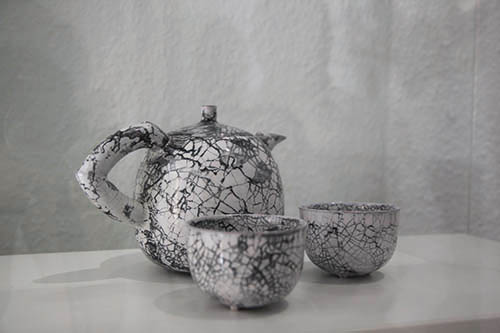
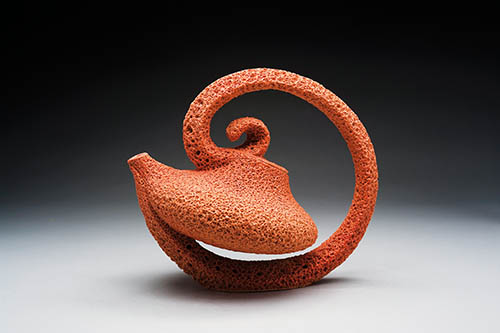
The teapot is his trademark. The style, the character are unmistakable. In his long career as an artist, Matin Möhwald has created hundreds of widely differing tea and coffee pots, which are all impressive in form and function. The decades-long exploration of this vessel has not exhausted him. He has repeatedly found new approaches to this theme, combining aesthetics with an appeal to the senses and pleasure. A Möhwald pot changes space. It demands attention, a conversation about the essentials of life. And then there are the tactile properties, conveyed with every touch. On the occasion of his seventieth birthday, the Kunst-halle Talstrasse Halle presented a representative selection of more than 100 teapots, many of them private loans.
The oldest teapots are from his time at Hedwig Bollhagen’s studio (1970-1973). Additively, he combines thrown elements, the corpus, with the spout and the handle. Each has its own expressive power. The focus is on the experimental, the modelling of a sculpture that happens to also have the function of a teapot. The young potter then moved to Bischofswerda, Upper Lusatia in Saxony, to work at the Braun- und Kunsttöpferei (“Brown Ware and Art Pottery”) workshop there. This state-owned enterprise (VEB) fired with coal. The fascinating experience he gained there left its mark on his work. From 1974, he worked in the studio of Gertraud Möhwald, his mother. Here, he discovered the round form, the sphere, which was to define his later work.

(Doris Weilandt)

Martin Möhwald

Pang Swee Tuan

Pang Swee Tuan is a distinguished Singaporean ceramist whose evocative works bridge tradition and contemporary expression. Known for his mastery of form, texture and glaze, Pang has spent decades shaping clay into pieces that reflect both personal introspection and cultural heritage. His ceramics – often organic in form and deeply rooted in nature – speak to a quiet elegance and meditative strength. As a pioneer in Singapore’s ceramic art scene, Pang has played a vital role in nurturing appreciation for the craft locally and internationally. This interview delves into his artistic journey, signature techniques and enduring influence on Singapore’s visual arts landscape. I want to thank my friend, Tan, Chia Chuen, himself an exceptional part-time ceramist (see New Ceramics issue 6/20), who was a great help to me in communicating with Mr Pang.
Mr Pang, I had the great pleasure of visiting your studio and viewing your work. I wonder, what sparked your interest in ceramics and how did your journey as a ceramist begin?

My first exposure to ceramics began during my high school days in Chung Cheng High School (referred hereafter as CCHS) in the 1970s, a few years after Singapore gained independence abruptly. Singapore’s early post-independence years were dire and policies were necessarily focused on the development of infrastructure and the building of a more robust economy. I am henceforth in gratitude to CCHS (guided by the philosophy of “Excellence in Education for All” – they admitted students from all strata of society) for the provision of education and the selfless contributions from many great teachers in the preservation and development of art in Singapore.

(Evelyne Schoenmann)

Pang Swee Tuan

Anne-Laure Cano

Some artists develop one artistic vocabulary and use it repeatedly across their careers. Others are consistent only in their variation, restlessly seeking new ways to express themselves in ever more surprising ways. Anne-Laure Cano is resolutely the latter. After exhibiting a remarkable body of work at her London City Lit diploma show in 2017, her practice has ingeniously mutated. It exemplifies the adage that change is the only constant.
Yet Cano’s sculptures are connected by an engagement with the concept of “accumulation”, if in different ways. After all, in less than a decade she has accumulated new experiences and contexts for her work; she has moved from Bordeaux to London to Barcelona, set up new studios and utilised new clays and glazes. She has accumulated new skills and mastered new languages, oral as well as visual. Whilst others may regard their work as a diary of change, Cano reflects upon the past only to inform the present. Older works are not sentimental keepsakes but raw material for new pieces that are, themselves, accumulations of new thought, experience and her own evolving sense of self.
Whispers – a series first shown in her final diploma show – were constructed from tin cans that were filled with different clays and glazes and then fired. The resulting sculptures are like archaeological soil samples, revealing strata of soil and rock that record different time periods. The word ”stratum” (plural ”strata”) refers to layers of rock, but it also refers to the layers that comprise human skin.

(Ashley Thorpe)

Anne-Laure Cano

Ryan Matthew Mitchell

Most Chinese people believe in the concept of “yuanfen”, a predestined natural affinity between people – I am unsure if there’s a similar notion in foreign cultures. I think yuanfen is the inevitability that exists within chance. Given the length of a human life, this element of chance brings many surprises and offers solace to an otherwise imperfect existence. That there could be a connection between China and the Coal Ball and between the Coal Ball and myself, must also be a matter of yuanfen.
Since 2014, the American artist Ryan Matthew Mitchell – known throughout Chinese art circles by his pen name Meiqiu (literally translated as coal ball, a type of roughly hewn charcoal briquette) has lived and worked in Jingdezhen, China as a sculptor whose practice bridges arts traditions of East and West. Mitchell first arrived in China in 2007 as an artist included in the Fuping Museums Project in Shanxi. Returning in subsequent years to continue working, exhibit, curate programming and run an art centre in Shenzhen. Mitchell eventually was asked and became the founding Art Director of Taoxichuan Art Center in Jingdezhen. In that role, he helped shape the site’s transformation from an abandoned porcelain factory into one of China’s most dynamic cultural sites, initiating early international programs that centred Jingdezhen as platform for international exchange and dialogue and the heightened the role of contemporary ceramic art within China today.

(Gui Ming)

Ryan Matthew Mitchell

British Ceramics Biennial 2025

The town of Stoke-on-Trent in the UK, long known as the Potteries, is leaning into its clay heritage. Bottle kilns still punctuate the skyline, old factories now house studios, and craft remains central to civic identity. In July 2024, that legacy was formally recognised when the city became a World Craft City, a timely accolade as it marks its centenary and hosts the ninth British Ceramics Biennial (BCB).
Running from 6 September – 19 October 2025 at the Spode Works, BCB 2025 turned the former factory into a hub of exhibitions, screenings, talks and workshops. The programme spanned local and global concerns, asking how clay can narrate urgent social issues and rebuild civic life.
Award Exhibition Highlights
The biennial’s flagship Award 2025 showcased leading ceramicists. Leah Jensen’s It was Lost in the Move tackled housing insecurity through unglazed terracotta and packing debris, while Daniel Silver’s Family reflected on kinship with oil-painted ceramic heads. Noor Ali Chagani and Clio Lloyd-Jacob’s Existing to be Removed reimagined fragile brick homes, questioning the meaning of shelter when it is under threat.
Jo Taylor, (winner of the British Ceramics Biennale 2025 Award Prize), dazzled with (Not) Guilty Pleasures, Rococo-inspired vessels that echo opulence and social play. Displayed under Spode’s skylight, they felt like siblings navigating polite society.

(Julia Allen-Lancaster)

Tim Fluck, Pleasure Perceptions Totems, 2025   photo – Jenny Harper

The ceramics collection of the
INTERNATIONAL CERAMICS STUDIOS, ICSHU, Kecszkemét at Savaria Museum

A cause for celebration: on 3 October 2025, the exhibition of the ceramics collection of the INTERNATIONAL CERAMICS STUDIO in Szombathely was opened at the Savaria Museum art gallery! A fitting setting for this internationally conceived collection of ceramic art, whose quality is undeniably of the highest calibre in the field.
For the many guests from all over the world, it was a historic moment to see ceramic art presented in an art gallery!
The exhibited pieces were all created at the studio in Kecskemét: this began many years ago, when international residencies and competitions were not so readily available. The internet and social media for artists were not yet accessible. Hungary was a pioneer in the burgeoning international world of communication and ceramic art education: Kecskemét and Siklós were places where international exchange in artistic ceramics was facilitated. The International Ceramics Studio Kecskemét is the oldest ceramics institute in Europe. Founded by Janos Probstner in the 1970s, with a focus on international ceramic art, the gallery organized symposia and exhibitions early on, as well as establishing master classes. Groundbreaking collaborations included those with Janet Mansfield (Australia), Tony Franks (Scotland), David Binns (UK), Michael Flynn (Wales), Ilona Romulae (Latvia) and many others, who came and left full of impressions. Outstanding pieces were created on-site and continue to be donated to the collection, selected according to the highest artistic and aesthetic standards.

(Monika Gass)

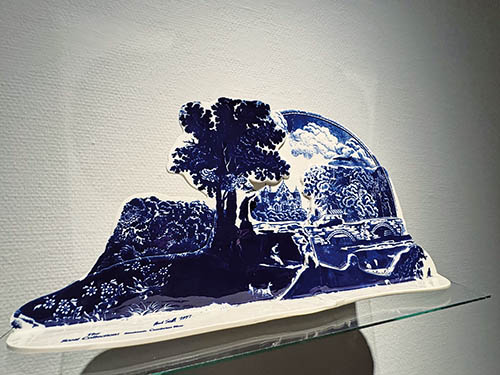
Paul Scott (GB), Kecskemét, Cumbrian Blue, 1997

Cizhou Kiln International Ceramic Biennale

The Cizhou Kiln International Ceramic Biennale hosted by the Fengfeng Museum in Handan City, Hebei Province of China (photo on top) opened in the fall of 2024. Roughly 150 artists presented work in this landmark exhibition. Approximately 10 foreign artists were included in the exhibition.
The Museum is huge and new. Hundreds of artists were flown in for the opening celebrations and symposium. The organizing committee was populated by famous artists: Bai Ming, Luo Xiaoping, Lv Pinchang, Liu Chun, Zhu Legeng, Yuan Hong, Qiu Chunlin, Qiu Zhijie, Pi Daojian, Lu Hong, Li Xianting, He Bingqin, Hang Jian, Fang Man, Fang Lijun, Du Hongyu and Qi Haifeng.
The opening of the exhibition was complemented by a day of symposia with discussions among artists and critics.
The region has a rich cultural history (black and white slip-decorated Cizhou ware and ancient grotto sculptures). Modern economic development in China, always spearheaded by the government, is fascinatingly multifaceted. Instead of focusing almost exclusively on business development, the government provides generous support for culture, museums and the arts in the belief that a well-rounded broad approach promotes general well-being, cultural education and tourism.

(Marc Leuthold)

Great Compassion Mantra by Lu Bin

Artist Journal

Marc Leuthold – USA
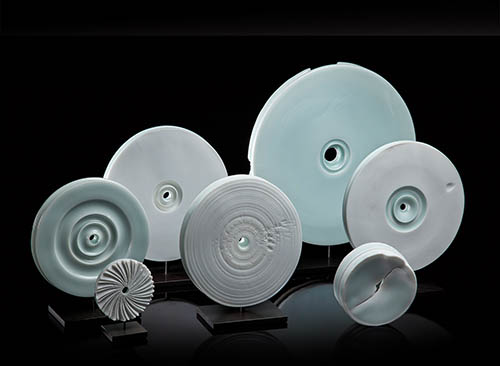
Mark Leuthold (b. 1962) stated that he chose clay as his material because of its malleability, making it easier to handle than other materials during the creative process, and also allowing it to transform into different media. Single-piece circular vessels and sculptural groups occupy an equal proportion. He uses circular ceramic slabs as the basic unit, and disc-like rings as the fundamental unit, starting from the central circle to cut and carve irregular, flowing lines. The layout of the sculpture is like the composition of a painting; the viewer can almost feel the force of the clay flying as the artist makes his cut. Some lines are carefully planned, executed step by step.

Li Wei-han (Rosanna Li) – Hong Kong
Li Wei-han b. (1957) studied ceramics and art education in Hong Kong and the United Kingdom during the 1980s. She later taught at the School of Design at The Hong Kong Polytechnic University. Li’s ceramic practice focuses on portraying the every-day lives of ordinary Hong Kong people. From her choice of clay to the postures of her figures, she preserves the natural and unrefined qualities of the material. Eschewing intricate details, her works speak with quiet sincerity about the rhythms and emotions of daily life. Her public art installations, including People Passing By People Lazing By at the MTR Yau Tong Station and those at the Hong Kong International Airport, extend her narrative into shared urban spaces.

(Ting-Ju SHAO)

Marc Leuthold – USA

Li Wei-han (Rosanna Li) – Hong Kong

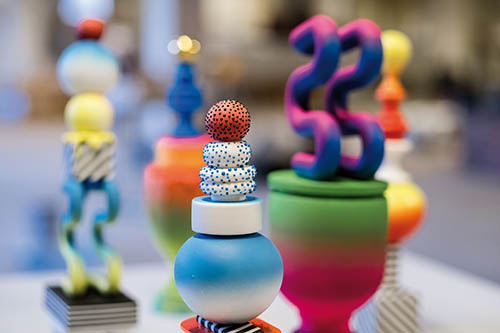
In Studio with Paolo Porelli

You began your creative life as a painter before turning to ceramics and sculpture. What drew you specifically to clay as your primary medium?

After graduating from the academy of fine arts with a specialisation in painting, I entered a personal aesthetic crisis. The illusion of volume and space created by painting was no longer enough for me. I needed physicality and concreteness of form, and by chance I encountered ceramics, which became an extension of the pictorial material with which I could create volume and preserve colour as a fundamental part of expressive reality. As a self-taught ceramic artist, it took years before I began to think in ceramic terms and adapt to its nature and timing, and understand the physical state of the clay at every moment of the working cycle. I also had to learn to note down the materials and quantities of raw materials that I used to achieve consistent results. This aspect was of particular significance in my experimentation in a totally intuitive way with the in-glaze lustre technique that through a chemical transformation of the glaze, creates surprising chromatic effects at low temperature.

(Evelyne Schoenmann)

Paolo Porelli