

[rs_section_text_block style=”style2″ heading=”New Ceramics 2/2021 – Content”][/rs_section_text_block]
NEWS
PROFILES
Sandra Baruffi – Italy
Elaine Peto – UK
Moni Armbruster – Germany
Keiyona Stumpf – Germany
Laurent Petit – France
Christine Duncombe-Thüring – Germany
Dorothee Wenz – Germany
FORUM
Abstract Realism – Gustav Weiß – Art Theory
EXHIBITIONS / EVENTS
Japanese Ceramics at Museum Ariana – Geneva – Switzerland
Festa della Ceramica – Nove – Italy
Magic Reality – Delft – Netherlands
Terra Symposium – Kikinda – Serbia
ArtCeram 2020 – Sèvres – France
Challenge in Porcelain – Wijster – Netherlands
CERAMICS & TRAVEL
Residency – Jingdezhen – China
ARTIST JOURNAL
LU Bin and Margareta Daepp – Ting-Ju Shao
IN STUDIO
Luca Tripaldi – Evelyne Schoenmann – Interview / Developing Skills
DATES / Exhibitions / Galleries / Museums
COURSES / SEMINARS / MARKETS
ADVERTISEMENTS
PREVIEW
[rs_section_title style=”style3″ title=”New Ceramics 2/2021″ class=”p-b-30″]Click on the symbols for further details.[/rs_section_title]
PROFILES
Sandra Baruffi – Italy, Elaine Peto – UK, Moni Armbruster – Germany, Keiyona Stumpf – Germany, Laurent Petit – France, Christine Duncombe-Thüring – Germany, Dorothee Wenz – Germany
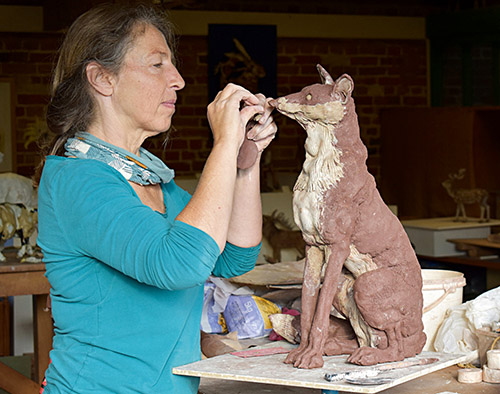
Elaine Peto
FORUM
Abstract Realism – Gustav Weiß – Art Theory
EXHIBITIONS / EVENTS
Japanese Ceramics at Museum Ariana – Geneva – Switzerland, Festa della Ceramica – Nove – Italy, Magic Reality – Delft – Netherlands, Terra Symposium – Kikinda – Serbia, ArtCeram 2020 – Sèvres – France, Challenge in Porcelain – Wijster – Netherlands
Read more
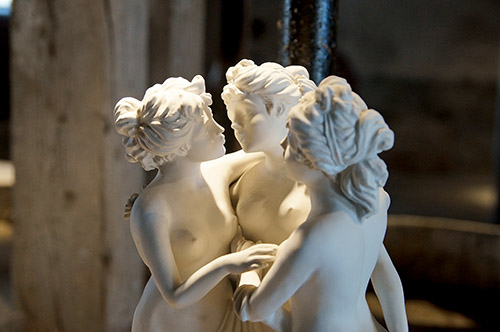
Giulia Bertolin – exhibition Vecchio Mulino
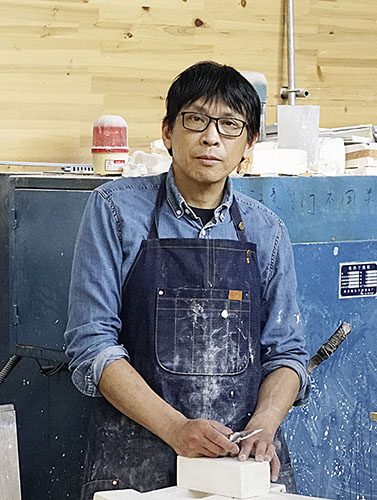
LU Bin
DATES
Dates and Exhibitions from Amsterdam to Winzer
[rs_section_title title=”Extracts” class=”p-b-30″]Profile: Elaine Peto – UK, Moni Armbruster – Germany, Laurent Petit – France, Dorothee Wenz – Germany
Exhibitions: Festa della Ceramica – Nove – Italy, Magic Reality – Delft – Netherlands, Challenge in Porcelain – Wijster – Netherlands
Artist-Journal: LU Bin and Margareta Daepp
In Studio: Luca Tripaldi – Evelyne Schoenmann[/rs_section_title]
Exhibitions: Festa della Ceramica – Nove – Italy, Magic Reality – Delft – Netherlands, Challenge in Porcelain – Wijster – Netherlands
Artist-Journal: LU Bin and Margareta Daepp
In Studio: Luca Tripaldi – Evelyne Schoenmann[/rs_section_title]
[rs_section_text_block heading=”Elaine Peto” btn_link_one=”url:%23||” btn_link_two=”url:%23||”]Clay animals by award winning British sculptor Elaine Peto can be found in galleries and collections in the UK and France and despite the ongoing pandemic her sales are holding up. “I have to keep supplying my galleries with work so I never get bored,” she says.
Elaine’s larger pieces can measure up to two feet tall or long but she also makes small sculptures that are just a few inches in size. Favourite clays for Elaine are stoneware and porcelain. “I have a crank clay, which has a high grog content, making it ideal for throwing, hand building, sculpture and large tiles. This is particularly good for what I do – I buy it from Spain and will hopefully still be able to do this after Brexit takes place. “Skulls are a really good example of how to build the head of a particular creature from the placement of the eyes and ears to the shape of the jaw. I have made one or two skulls in porcelain and they are such beautiful shapes”
Elaine’s larger pieces can measure up to two feet tall or long but she also makes small sculptures that are just a few inches in size. Favourite clays for Elaine are stoneware and porcelain. “I have a crank clay, which has a high grog content, making it ideal for throwing, hand building, sculpture and large tiles. This is particularly good for what I do – I buy it from Spain and will hopefully still be able to do this after Brexit takes place. “Skulls are a really good example of how to build the head of a particular creature from the placement of the eyes and ears to the shape of the jaw. I have made one or two skulls in porcelain and they are such beautiful shapes”
(Tim Saunders)[/rs_section_text_block]
[rs_image_block image=”7284″ class=”p-t-30″]
Elaine Peto
[rs_promo_box style=”style7″ btn_text=”Order Now” link=”url:%23aboform||”]
Order easily on 02426-94 80 68 or by email on bestellungen@neue-keramik.de
[/rs_promo_box][rs_section_text_block heading=”Moni Armbruster” btn_link_one=”url:%23||” btn_link_two=”url:%23||”]Moni Armbruster’s interest in ceramics manifested itself at an early age. When she was sixteen, she took pottery courses and fell in love with the material. After graduation from school, she travelled the USA and met two students of ceramics in Boston, who showed her Massachusetts College of Art. Overwhelmed by the people, the art, the rooms and the incredible energy, she soon realised that she had to study there. In the two successive years at Massart, she was particularly impressed by the free spirit that reigned at the college – art, craft or ceramics, it made no difference. She was not familiar with truly being able to express oneself artistically through ceramics in Germany.
Every morning at eight, Professor Ben Ryterband came into the studio and was amazed that the “busy German girl” was already there to experiment. He provided stimuli, inspired and motivated her – once he simply put a book by her work place – Constantin Brancusi – and she recognised the sculptural lines of her vases in Brancusi’s columnar sculptures.
Every morning at eight, Professor Ben Ryterband came into the studio and was amazed that the “busy German girl” was already there to experiment. He provided stimuli, inspired and motivated her – once he simply put a book by her work place – Constantin Brancusi – and she recognised the sculptural lines of her vases in Brancusi’s columnar sculptures.
(Karen Sternberg)[/rs_section_text_block]
[rs_image_block image=”7291″ class=”p-t-30″]
Moni Armbruster
[rs_section_text_block heading=”Laurent Petit” btn_link_one=”url:%23||” btn_link_two=”url:%23||”]Recently featured at La Piscine Museum in Roubaix and Galerie de l’Ancienne Poste in Toucy (Burgundy), Laurent Petit revealed a universe that at once embraces history, mythologies and the plant realm. He works in series, questioning human nature as much as the nature that surrounds us.
Born in 1962 and trained at the École Nationale Supérieure des Arts Décoratifs in Paris, Laurent Petit gradually let himself be won over by his material as he granted it increasing freedom. An industrial designer at first, he acquainted himself with clay during a raku course in 1992, followed up with training at Maison de la Céramique in Mulhouse.
His corpus began with the series Presque-Objets, developed from 2002 to 2006, in which former vessels or everyday references can be identified, strung out in shades of ochre and white.
Born in 1962 and trained at the École Nationale Supérieure des Arts Décoratifs in Paris, Laurent Petit gradually let himself be won over by his material as he granted it increasing freedom. An industrial designer at first, he acquainted himself with clay during a raku course in 1992, followed up with training at Maison de la Céramique in Mulhouse.
His corpus began with the series Presque-Objets, developed from 2002 to 2006, in which former vessels or everyday references can be identified, strung out in shades of ochre and white.
(Marie Maertens)[/rs_section_text_block]
[rs_image_block image=”7289″ class=”p-t-30″]
Laurent Petit
[rs_section_text_block heading=”Dorothee Wenz” btn_link_one=”url:%23||” btn_link_two=”url:%23||”]It is the year 4130 A.D. An article in the Schwabenheim News: Archaeological Mystery Solved! After last month’s findings in the Schwabenheim district of Mainz, where undefinable coloured shards of material had been unearthed, the question of their origin has been solved. They are not of natural origin. They are ceramic shards. In deeper-lying strata, whole vessels – some of an impressive size, and made by hand, were found. It is a wonderful discovery that ascribes a special position to this phase of Schwabenheim Structural Ceramics. The artefacts have been dated at the end of the 20th and into the second half of the 21st century. Our extensive research has proved that they do not come from a factory but from the studio of a single artist. She lived from …
This is approximately how Dorothee Wenz’s studio will be discussed in the press at the beginning of the fifth millennium. It is fortunate that we know more about it. Her work really does have an unusual charisma. She builds vessels and figures that are closely related in their way.
This is approximately how Dorothee Wenz’s studio will be discussed in the press at the beginning of the fifth millennium. It is fortunate that we know more about it. Her work really does have an unusual charisma. She builds vessels and figures that are closely related in their way.
(Thomas Naethe)[/rs_section_text_block]
[rs_image_block image=”7295″ class=”p-t-30″]
Dorothee Wenz
[rs_section_text_block heading=”Festa Della Ceramica Nove 2020″ btn_link_one=”url:%23||” btn_link_two=”url:%23||”]Nove is at the end of the Sugana Valley in Veneto, Italy. As soon as you enter the town, you know that you have arrived at a place with a ceramics tradition. No matter where you look, ceramics are omnipresent. Through regional clay deposits, the situation on the River Brenta and the proximity to Venice, this is an ideal production site.
In the 16th century after demand from Venice for an interpretation of Chinese ceramics rose steadily and became too large for neighbouring Bassano, production was relocated to Nove. Soon majolica ceramics from companies like Antonibon, to name just one, were represented worldwide. In the 18th century, the imitation of Chinese brushwork gradually ceased and local motifs became widespread.
Today, majolica painting is the predominant form of surface treatment in the whole region. Other well-known ceramic items from this region are cuchi (ceramic pipes; the typical and probably best known figure is a soldier from Napoleon’s troops sitting on a horse).
In the 16th century after demand from Venice for an interpretation of Chinese ceramics rose steadily and became too large for neighbouring Bassano, production was relocated to Nove. Soon majolica ceramics from companies like Antonibon, to name just one, were represented worldwide. In the 18th century, the imitation of Chinese brushwork gradually ceased and local motifs became widespread.
Today, majolica painting is the predominant form of surface treatment in the whole region. Other well-known ceramic items from this region are cuchi (ceramic pipes; the typical and probably best known figure is a soldier from Napoleon’s troops sitting on a horse).
(Helene Kirchmair)[/rs_section_text_block]
[rs_image_block image=”7285″ class=”p-t-30″]
Giorgio di Palma book presentation “29giorni”
[rs_section_text_block heading=”Magic Reality” btn_link_one=”url:%23||” btn_link_two=”url:%23||”]In June of last year, Stephanie Marie Roos brought us some of her latest pieces: in these life sized busts, she concentrates even more on details in her excellent technique. Even if these are portraits of people you might know – my first exclamation when I saw the Butterfly Man was “I know him!” – it is ultimately not about a likeness. These works tell of something beyond the image – they speak to us.
Stephanie describes the new approach as a more psychological way to dive into human expressions. She is not looking for the grand gesture, rather a magical moment that captures the person.
Stephanie describes the new approach as a more psychological way to dive into human expressions. She is not looking for the grand gesture, rather a magical moment that captures the person.
An exhibition with work by Stephanie Marie Roos 10 April – 8 May 2021
Galerie Terra Delft , Nieuwstraat 7, NL-2611 HK Delft , The Netherlands
(Simone Haak + Joke Doedens)[/rs_section_text_block]
[rs_image_block image=”7290″ class=”p-t-30″]
Butterfly Man, 2020
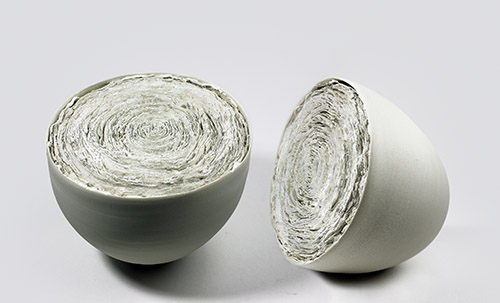
[rs_section_text_block heading=”Challenge in porcelain” btn_link_one=”url:%23||” btn_link_two=”url:%23||”]Three ceramicists, Gitta Radtke from Germany, Lut Laleman from Belgium and Wim Borst from the Netherlands, all take up the challenge in their own way with unique porcelain. Because all three know better than anyone that porcelain can lead to particularly refined, transparent and fragile objects.
These objects differ greatly per artist, but what they at least have in common is endless patience, precision and an extremely precise way of working.
Exhibition until 31 May 2021 at Galerie del Campo / Drijberseweg12 / 9418 PW Wijster, The Netherlands
These objects differ greatly per artist, but what they at least have in common is endless patience, precision and an extremely precise way of working.
Exhibition until 31 May 2021 at Galerie del Campo / Drijberseweg12 / 9418 PW Wijster, The Netherlands
(Lizette Groffen)[/rs_section_text_block]
[rs_image_block image=”7292″ class=”p-t-30″]
O.T., 2020, porcelain, h 10 x ø 9 cm
[rs_section_text_block heading=”Artist Journal: Jason Walker and Shih Hwa Lee” btn_link_one=”url:%23||” btn_link_two=”url:%23||”]Jason Walker (USA)
Walker (1973) features animals prominently in his works. He documents the human invasion of nature and the steady encroachments of animals’ habitats. His works also depict a new awareness introduced by technology that redefines the links between humanity and nature.
Walker (1973) features animals prominently in his works. He documents the human invasion of nature and the steady encroachments of animals’ habitats. His works also depict a new awareness introduced by technology that redefines the links between humanity and nature.
Shih Hwa Lee (Malaysia)
Born in Johor, Malaysia, in 1987, Lee now lives in Tainan, Taiwan. From fishes in the sea, reptiles on the land, to beasts of various kinds, her creatures are never-seen-before animals melded from different species symbolizing the union of ancient unknown forces. Made by her skilful hand-building and glazing techniques, every running or jumping auspicious animal with its unique story is a clear demonstration of forms and discourses.
[/rs_section_text_block]
[rs_image_block image=”7114″][rs_image_block image=”7115″ class=”p-t-30″]
Jason Walker
Shih Hwa Lee
[rs_section_text_block heading=”In Studio with Irina Razumovskaya” btn_link_one=”url:%23||” btn_link_two=”url:%23||”]Irina, I’ve read in an article that your interest in art already started at the tender age of five. That is very young and calls for an explanation…
I come from a typical Russian intelligentsia family of scientists. We lived in a grim communal flat, which is my earliest memory – endless corridors with closed doors, shared 100-year-old kitchen with dozens of pickling jars, myriads of cockroaches and odd neighbours. At the same time my family and I were immersed in a bubble of culture and beauty. In those days, this cultural overdose was a way to escape grim reality. And this is how my love for art has evolved. At the age of 5, I enrolled at the Kustodiev State Art School and in the Hermitage Museum Art Lecture programme, and since then, I have never stopped working in the world of art.
(Evelyne Schoenmann)[/rs_section_text_block]
[rs_image_block image=”7146″ class=”p-t-30″]
In Studio with Irina Razumovskaya
[rs_section_title style=”style2″ title=”Purchase a single issue here” class=”m-b-30″]Each issue is 11€ in Germany incl. 7% VAT, 11€ (EU), US$ 12€, 15sFr in Switzerland. Postage is calculated individually for single copies. (3,70€)[/rs_section_title]
[rs_section_title style=”style2″ title=”Order an online subscription here” class=”m-b-30″]Wherever you have internet access, you can read New Ceramics – at home or on your travels.
Price: 36€ including permanent access to our archive.[/rs_section_title]
Price: 36€ including permanent access to our archive.[/rs_section_title]
[rs_space height=”15″]